Areas
Slab Leak Repair in North Mountain Home
Slab leak repair in North Mountain Home centers on one thing: aging copper under ranch slabs. Many of the 1960s to 1980s ranch homes here have copper supply lines under concrete slabs, and those lines are now at the age when leaks begin. Call (986) 333-0586 and we will connect you with an experienced local pro who finds the leak before opening anything. We connect homeowners across Mountain Home, ID 83647 with experienced local plumbers.
- Typical era: 1960s to 1980s ranches
- Layout: Slab and crawlspace
- Calls answered 24/7
- Detection before any digging
- Pros who know Mountain Home homes
Why Leaks Start Here
Leaks here come down to a simple equation: mid-century construction plus copper plus time. Many of the ranch neighborhoods north of downtown date from the 1960s through the 1980s, and many of those homes carry their water supply in copper lines buried directly under the concrete slab. After decades underground, that copper is now squarely in the leak-prone years, which is why buried copper is the usual suspect here. A pinhole opens in the buried line, pressurized water escapes into the ground under the house, and the first sign is often nothing more than a water bill that will not stop climbing. Because water drains away beneath the slab, the house can look perfectly dry while the leak runs, which is exactly why the visit starts with careful detection.
The Homes Here: Mid-Century Ranches on Slabs and Crawlspaces
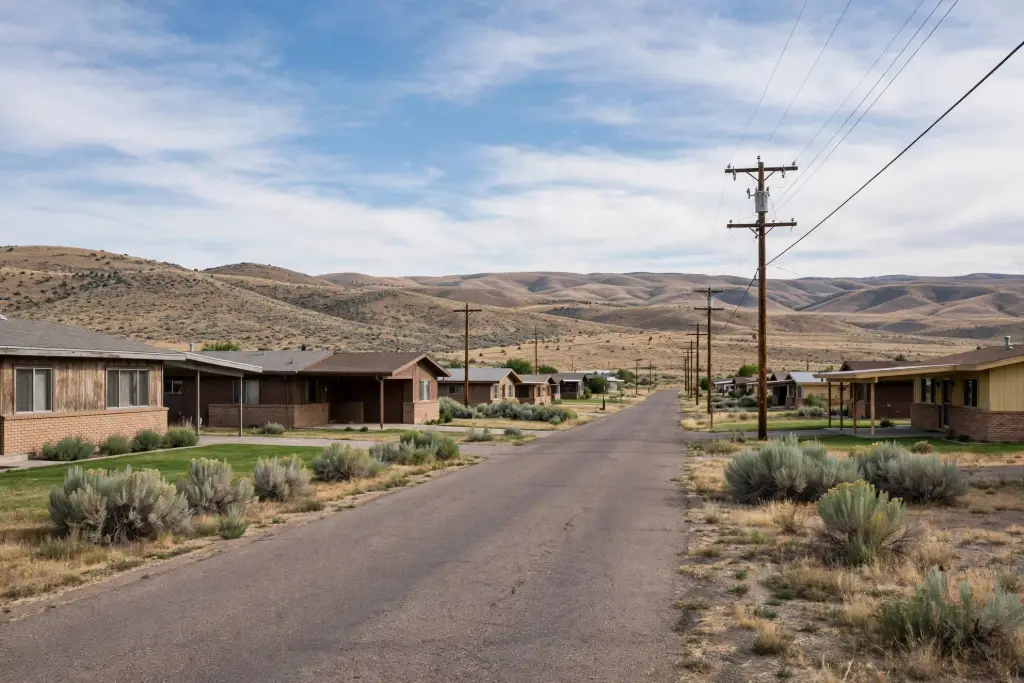
Many streets in North Mountain Home are lined with single-story ranch homes from the 1960s, 1970s, and 1980s: brick veneer fronts or full frame siding, attached garages, low rooflines, and moderate lots on quiet residential streets. Many were built on concrete slabs with the water supply running beneath them, while a share of the same streets used crawlspaces instead, so the technician always confirms which foundation a particular house has. These are comfortable family homes, and a good number of them have had only one or two owners, which means the plumbing is often original.
Where the lines run is remarkably consistent: the main enters from the meter near the street, passes under the front of the slab, and travels beneath the hallway floors toward the water heater in the garage or a utility corner, with hot and cold lines branching off under the kitchen and bathrooms. That long under-slab run is the vulnerable stretch, and it is where the technician usually starts listening.
Garage conversions, added bathrooms, and patio slabs poured after construction can shift where lines run, so the technician still maps each home rather than assuming.
Pinholes, Hot Lines, and Shifting Soil
Pinhole leaks in buried copper are the signature failure in this part of town. They start small, often on the hot side first, because hot water and constant circulation wear the line from the inside. The earliest symptoms read like mysteries: a warm patch under carpet or tile in the hallway, a water heater that cycles far more than it used to, or the faint sound of running water in a silent house. None of them look like plumbing trouble, which is why the bill spike so often comes first.
Soil movement is the second stressor. The dry, shifting ground around Mountain Home pushes and pulls on buried lines over the years, and the slab above does not move with them. Joints and bends take that stress hardest. When one leak is found, it is worth asking about the line as a whole, since copper of this age sometimes fails in more than one spot. That is the fork in the road: a single clean leak gets a targeted spot repair, while repeat leaks point toward a reroute or a repipe.
Meter, Hot Versus Cold, Then Listening
The visit opens with the meter. With every fixture off, a moving meter proves water is escaping under pressure, and a still meter rules a hidden leak out. Then the pro separates hot from cold, because that halves the search area in one step. Thermal scanning of the hallway floors reveals the warm patch of a hot-side leak; acoustic listening picks up the hiss of water leaving a pressurized line. The two methods together usually mark the spot within a small area.
In a North Mountain Home ranch, that full picture separates a one-time spot repair from the right longer-term answer. A good visit here ends with the homeowner understanding the leak location, the pipe's condition, and the real options before a single tool touches the floor.
How a North Side Call Unfolds
Call (986) 333-0586 and describe the symptoms: the bill, the warm floor, the sound, the home's decade. We connect you with an experienced local pro who knows these ranch streets and usually asks the home's age and foundation type before scheduling. On the visit, the technician runs the meter test, separates hot from cold, listens and scans along the slab, and marks the leak. Then comes the plain explanation: a spot repair at the marked location, a reroute that abandons the old line, or a repipe if the copper is failing in several places. North side visits follow this order: find it, map it, explain it, then fix it.
Where to Go Next
Once the leak is marked, a spot repair fixes it at the source, and when the old under-slab line is not worth keeping, a slab leak reroute runs a new path instead. Homes with repeat failures sometimes need a repipe after a slab leak that replaces the aging system outright. Older homes toward the core are covered by slab leak repair in Downtown Mountain Home, while the ranch streets to the south fall under slab leak repair in South Mountain Home. Everything connects back to slab leak mountain home help across the city.
North Mountain Home Questions
It comes down to era and construction: many of the 1960s to 1980s ranch streets here were built on slabs with buried copper supply lines now decades in the ground. That combination of age, concrete contact, and soil movement puts this part of town at higher risk.
Warm spots on the floor, a water heater that runs far more than it should, and hot water arriving unusually fast at a far tap all point to the hot line. A technician confirms it with a thermal scan and by isolating each side at the heater, which narrows the search area before anything is opened.
One clean leak in an otherwise sound line usually gets a targeted spot repair. When leaks repeat, or the copper shows wear along its length, the pro will talk through a reroute that abandons the under-slab line or a full repipe. The deciding factors are the pipe's overall condition, past leaks, and where the line runs. Ask the pro to explain which factor decided it.
Only if a spot repair is the chosen fix, and even then the opening stays limited to the marked leak location. If a reroute is chosen instead, the old under-slab line is left alone entirely and the new line takes a different path.
For most slab leak jobs in these ranch homes, no. Detection and a spot repair are contained work in one area, and a reroute runs new lines through the attic or walls while the old line stays buried. Water will be off during parts of the work, but staying in the home is normal.
Not always, but it is a fair question here. A single pinhole can be an isolated weak spot, yet copper under a slab for decades sometimes fails in more than one place. That is why the technician checks the line's overall condition and explains whether a spot repair or a longer-term fix fits better.
A dry house with a climbing bill is the classic hidden-leak pattern: water escaping under a slab often drains away without surfacing, so the bill becomes the first symptom. A meter test with every fixture off confirms whether water is moving when nothing is running.
Yes, as part of detection. By tracing the entry point, listening along the slab, and scanning the hot side, the technician maps the run and marks the leak on the floor, which is exactly how a visit should start.
Ranch Home With a Warm Floor? Call Now
Copper under a mid-century slab will not fix itself. Get slab leak repair in North Mountain Home that pinpoints the source first. Call (986) 333-0586. Calls answered 24/7.
Call About Your Ranch Home's Copper