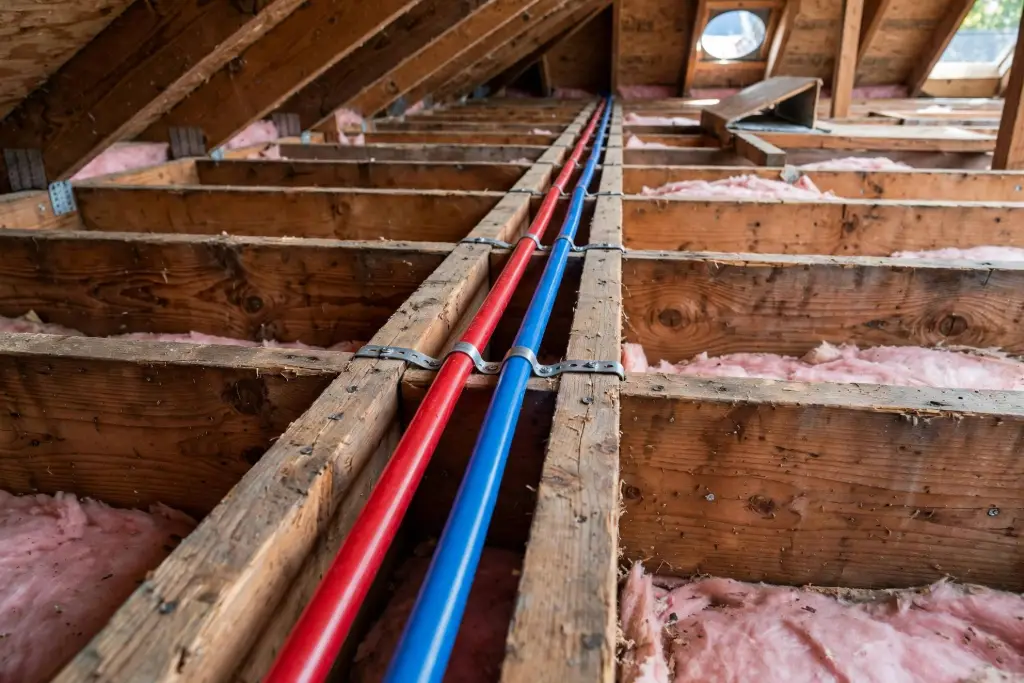
One slab leak is a repair. Two slab leaks are a pattern, and a pattern means the under-slab line itself is failing. A slab leak reroute in Mountain Home solves the pattern instead of chasing it: the leaking line is sealed off and abandoned under the concrete, and a new water line is run to the same fixtures through a completely different path. We connect you with experienced local plumbers who do this work in Mountain Home homes. If your whole system is aging, a repipe after a slab leak may make more sense. Call (986) 333-0586 to get a straight answer by phone on which option fits your home.
What a Slab Leak Reroute Is
A reroute is a change of strategy. Instead of opening the concrete to fix the leaking pipe where it sits, the technician disconnects that under-slab run entirely and leaves it dead in the ground. A new line is run from the water source to the fixtures that line served, following a route through the house that never goes near the slab.
The abandoned line is capped at both ends and disconnected from the supply. Nothing is dug up, nothing is jackhammered, and the leak simply stops because its water supply is gone.
This is a standard, well-established approach for aging under-slab piping. The old line stays dead in the ground, and the home gets a new, accessible supply line. For homes with repeat failures, it is often the most sensible long-term fix.
Pipe Reroute Through Walls or the Attic
The new line needs a path, and in most Mountain Home homes the attic is the obvious one. A pipe reroute through attic space suits single-story ranch layouts: up through a wall cavity from the water source, across the attic above the rooms, and down to each fixture. The line is secured and protected along the way.
Walls carry the vertical drops. Small openings are made where the line rises and where it drops to fixtures, then patched after the pipe is in and tested. The crew plans the route to use the fewest openings possible.
Every home gets its own route plan. Two-story sections, additions, and unusual layouts change the plan, and the technician walks the route with you before any work starts. Check availability in Mountain Home.
Why This Takes the Line Out of the Slab
Here is the core logic. A spot repair fixes the section that failed today. It does nothing for the rest of the under-slab line, which is the same age, the same material, and under the same soil. When that line fails again elsewhere, you are back to opening concrete.
This removes the entire under-slab run from service. The line that kept failing is dead and dry. If the new line ever needs work, it runs where it can be reached without opening concrete.
That is why this approach is popular with owners of rental homes and anyone who has already had one slab opening. It takes the whole run out of service, while each spot repair only addresses the section that failed.
Drywall Access and Patching
The new route trades concrete work for drywall work, and drywall is the easier trade. The access openings are small and planned: where the line rises from the source, where it drops to fixtures, and occasionally where it turns through a wall.
After the new line is pressure tested and holding, the crew patches the access points: filling, taping, and smoothing so the wall is ready for paint. Paint matching is on you, worth knowing if your walls have custom colors.
Compared to a slab opening, the drywall route is quieter, cleaner, and faster to restore. There is no concrete dust, no curing time, and no flooring specialist needed afterward.
When to Choose a Slab Leak Reroute Over Spot Repair
Make the switch when the system is telling you it is done. Two leaks in the same under-slab line is the clearest signal. Visible corrosion on exposed pipe, a history of pinhole leaks, or a line that fails pressure testing along its length are all signs that spot repairs will keep coming.
Choose the spot repair when this is the first leak and the rest of the line tests sound. One failure in a healthy system does not justify abandoning the whole run.
If the entire system is aging and you are weighing a full repipe after a slab leak against a single-line reroute, the difference is scope. A reroute replaces the failing run; a repipe replaces everything. Reach the on-call team and describe your leak history.
Spot Repair vs Reroute vs Repipe: the General Picture
| Approach | What it fixes | What gets opened | Best fit |
|---|---|---|---|
| Spot repair | The single leaking section of pipe | A small, targeted opening in the slab | One leak in otherwise sound piping |
| Reroute | The whole failing under-slab run | Small drywall access points, no concrete | Repeat leaks or an aging under-slab line |
| Whole-home repipe | The entire supply system | Drywall access points throughout, no concrete | System-wide aging with leaks in multiple areas |
Your home's piping, layout, and leak history decide which row fits, and a technician reads all three during the visit. Call and describe what you know; the right option usually becomes clear fast.
Mountain Home Homes: Where Reroutes Make Sense
Downtown Mountain Home and the older streets include many pre-1960 homes with mixed foundations, and the slab-honesty rule matters here. Some of these homes have crawlspaces where the piping is already accessible. On true slab sections, rerouting still beats concrete work, but the route plan has to account for older framing and additions.
Reroutes come up most in the 1960s through 1980s ranch neighborhoods. Single-story slab homes with under-slab copper now at leak-prone age, straightforward attic access, and back-to-back bathrooms that make clean routes. When a homeowner here has had two slab leaks, a reroute is usually the next conversation.
Newer subdivisions from the 1990s onward rarely need reroutes, because PEX systems and newer layouts fail less often under the slab. When one does happen here, it is usually a single hot-side line or a section stressed by soil movement. And the honest note for every era: not every hidden leak calls for slab work. Homeowners considering slab leak repair in South Mountain Home or slab leak repair in North Mountain Home can ask for a tech who will verify the foundation type first.
While You Wait for Your Reroute Visit
- Clear a path to the attic access and to the walls where fixtures sit back to back.
- Note where your water heater sits and which fixtures lost pressure or heat.
- If water is actively surfacing, close the main shut-off until the tech arrives.
- Photograph the symptoms, your meter readings, and the rooms the line serves.
- Make a list of every leak this home has had, with rough dates. The pattern decides the fix.
Call to plan the reroute. The new line runs clear of the slab.
Slab Leak Reroute FAQs
A reroute leaves the leaking under-slab line in place, sealed off and abandoned, and runs a brand-new water line to the same fixtures through walls, ceilings, or the attic. The old pipe is disconnected, so it no longer carries water.
It depends on the system. A spot repair is the right call for a single leak in otherwise sound piping. A reroute is usually the smarter choice when the line has leaked before or the exposed pipe shows age throughout, because it removes that whole under-slab run from service.
The new line is routed through the most practical path: up through a wall cavity, across the attic, and down to the fixtures that need service. The technician picks the route that needs the least drywall opened and keeps the pipe protected.
Some drywall access is normal where the new line rises and drops, but it is small, targeted openings, not whole walls. The crew plans the route to minimize them and patches the access points after the pipe is in.
The usual sequence is: plan the route, run the new line, connect and pressure test, then patch the access points. Your tech will explain the sequence and what to expect before work starts.
A new line is sized to serve the same fixtures from the same supply, and the pressure test confirms it. The technician pressure tests the new line before finishing, so any issue shows up on the gauge, not in your shower.
Yes, and hot-line reroutes are among the most common. Hot-side under-slab lines fail first in many Mountain Home homes, so moving just the hot line solves the immediate problem without touching the cold side.
Permit needs vary by city and by the scope of the work, so there is no one-size answer. The local professional handling your job can tell you what applies to your job. Ask when you call.
Plan Your Slab Leak Reroute in Mountain Home
Stop fixing the same under-slab line twice. Call now and a local tech will map the cleanest route and explain the plan before any work begins.
Get Mountain Home help