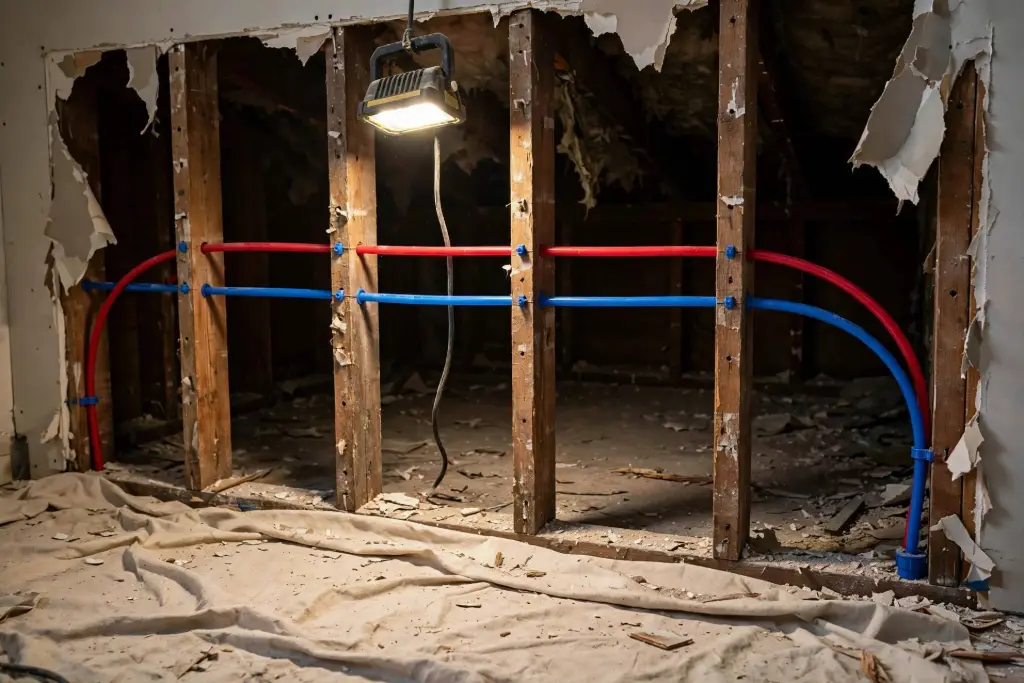
If slab leaks keep coming back to your home, the decision often starts with one honest question: is the whole system wearing out, or was that leak a one-off? One spot repair fixes one leak. When copper lines reach the age where a second or third leak appears, each new wet spot hints that more are on the way. Replacing the system moves your water lines out of the slab and into walls and attic spaces, where future problems can be reached without breaking concrete.
We connect Mountain Home homeowners with experienced local plumbers who replace the water lines in slab houses. Talk to a repipe specialist: call (986) 333-0586 and a local pro will ask about your leak history, your home's layout, and how you want the finished work to look. No pressure and no confusing terms, just straight answers before anything starts.
When Repeat Leaks Point to a Repipe
A single slab leak is usually a simple story: one weak spot, one repair, done. The story changes when the leaks keep coming. Homeowners usually describe the same pattern: two leaks in different rooms within a year, a new warm spot months after the last repair, or water pressure that keeps dropping. Each of these hints that the under-slab copper is wearing out along its whole length.
This pattern is common in Mountain Home's 1960s to 1980s ranch homes, where under-slab copper has spent decades in contact with soil and concrete. Every spot repair opens the floor again, and every opening means another patch of flooring. At some point, replacing every line at once is the calmer choice. The pro who visits will look at your leak history and your home's layout, then give a straight opinion on whether a repipe makes sense or one more targeted repair will do.
| Approach | What it does | When it fits |
|---|---|---|
| Spot repair | Opens the slab at one leak and fixes that section of pipe | A single leak in an otherwise sound system |
| Reroute | Abandons the under-slab line and runs a new line overhead | Repeat leaks on one line that keeps failing |
| Whole-home repipe | Replaces all supply lines with new overhead piping | Leaks in multiple areas, or an aging copper system |
PEX or Copper: Choosing the New Pipe
Most repipes in Mountain Home use PEX or copper, and both are proven choices for a house with under-slab leak trouble. Many homeowners choose PEX because the flexible tubing snakes through attic spaces and wall cavities with far fewer joints, which means fewer places where a future leak could start.
Copper is the rigid, familiar pipe that many older homes already have, and some homeowners simply prefer it. The pro will talk through both options, including how each one routes through your particular home and what the finished work looks like at every fixture. Either way, the old under-slab lines are abandoned in place, so the pipes that caused your trouble are disconnected from the supply. Call to talk through repipe options and hear how each material would work in your house.
Routing New Lines Through Attics in Slab Homes
A slab home has no basement or crawlspace to work in, so the new lines usually travel overhead. The pro runs a main trunk through the attic, then drops individual lines down inside walls to each sink, toilet, shower, and the water heater. Small openings in drywall give access at each drop, and those patches are repaired as part of the job.
Mountain Home winters get properly cold, so the pro routes attic lines with freezing in mind and keeps runs protected where the attic is coldest. If your trouble has been on the hot side, read about a hot water slab leak to see why those lines often fail first.
What the Repipe Process Looks Like
Every job starts with a walkthrough. The pro maps your fixtures, checks how the attic and walls are laid out, and sketches a route for the new lines. You will know where every line runs, which walls need small openings, and what the plan is for your water heater before any work begins.
During the work, water is shut off in sections so you are never without it longer than necessary. Each new line gets a pressure test before walls are closed, so the system is proven tight. The old under-slab lines stay buried and disconnected. When the last fixture is reconnected, your water no longer travels under concrete at all.
Planning Daily Life Around the Repipe Work
Most families stay in the home while the work is done. The noisiest work happens in the attic and at wall openings, and the crew keeps one bathroom working as long as possible. Clear a path to the attic hatch and move breakables away from walls where lines will drop; the crew handles everything else.
Pets do better in a closed room away from open attic hatches. Plan simple meals that do not need the kitchen sink for part of a day. Before the crew leaves, walk the house with the pro, run every tap, and make sure you are happy with how everything looks.
Mountain Home Homes: Where Repipes Make Sense
Mountain Home's housing tells the story clearly. Downtown's older streets mix slab, crawlspace, and basement foundations, so a leak there might not be a slab leak at all; the pro confirms what sits under your floor before recommending anything. The 1960s to 1980s ranch neighborhoods are the heart of repipe work: single-story slab homes with copper lines now at the age where leaks arrive in groups.
Newer subdivisions on the west side, where calls for slab leak repair in West Mountain Home come from, are often built on crawlspaces with PEX, so whole repipes are rarer there and fitting leaks are the more common story. South side ranch streets, served by slab leak repair in South Mountain Home visits, sit squarely in the copper under slab era. Honest framing matters here: many newer Mountain Home homes stand on crawlspaces, and not every hidden leak is a slab leak.
While You Wait: Safe Steps Before the Repipe Visit
- Do the meter test: turn off every tap and appliance, then watch the meter for movement.
- If water is surfacing through the floor, close the main shut-off.
- Photograph wet areas and any floor damage for your records.
- Do not break up flooring yourself to look for the leak.
- Write down your leak history: when each leak appeared, where, and what was fixed. The pro will ask.
Still unsure the leaks are slab related? Walk through the signs of a slab leak checklist first. Describe your leak history and get a visit scheduled with a local pro.
Whole-Home Repipe Questions
Not automatically. Two leaks close together in an older copper system strongly suggest the lines are wearing out, but the pro will look at where the leaks happened and how your home is built before advising you. Sometimes the honest answer is one more targeted repair. Replacing every line is a big step, so ask for the reasoning behind the recommendation, not just the recommendation itself.
It depends on the size of your home, the number of fixtures, and how the attic and walls are laid out. The pro will walk through your house and explain the plan for your specific home before work starts, so you know what to expect. Ask how water shutoffs will be staged so you can plan your days around them.
No. New lines usually run through the attic, with small drops inside walls to each fixture, so openings stay limited to access points. The pro plans the route to keep openings few and small, and patches them as part of the job.
Both work well in Mountain Home homes. PEX is flexible and routes through attics with fewer joints, while copper is rigid and familiar to most homeowners. The pro will explain how each option fits your home's layout and your preferences, then let you decide.
In most cases, yes. Water is shut off in sections rather than for the whole project, and the crew keeps the disruption to the work areas. If anyone in the home is sensitive to noise or dust, ask the pro about the noisiest phases when you schedule.
A repipe removes your supply lines from under the slab, so under-slab supply leaks stop being a worry. No one can promise a home will never have another plumbing problem anywhere, but once the old lines are abandoned, your supply water no longer runs under the slab.
Requirements vary by project and location, so check with the local building office for your address. The pro can tell you what is usually needed for this work in Mountain Home and help you understand the steps.
Drywall patching at the access points is part of the job. Openings are finished to blend with the surrounding wall. Final painting is usually left to you so you can match your own colors.
Ask a local pro if a repipe is right for your home before the next leak decides for you.
Ready to Talk Through a Repipe in Mountain Home?
If under-slab leaks keep returning, new piping takes the supply lines out of the slab altogether. Call (986) 333-0586 now and get straight answers about your home.
Call now and plan your repipe