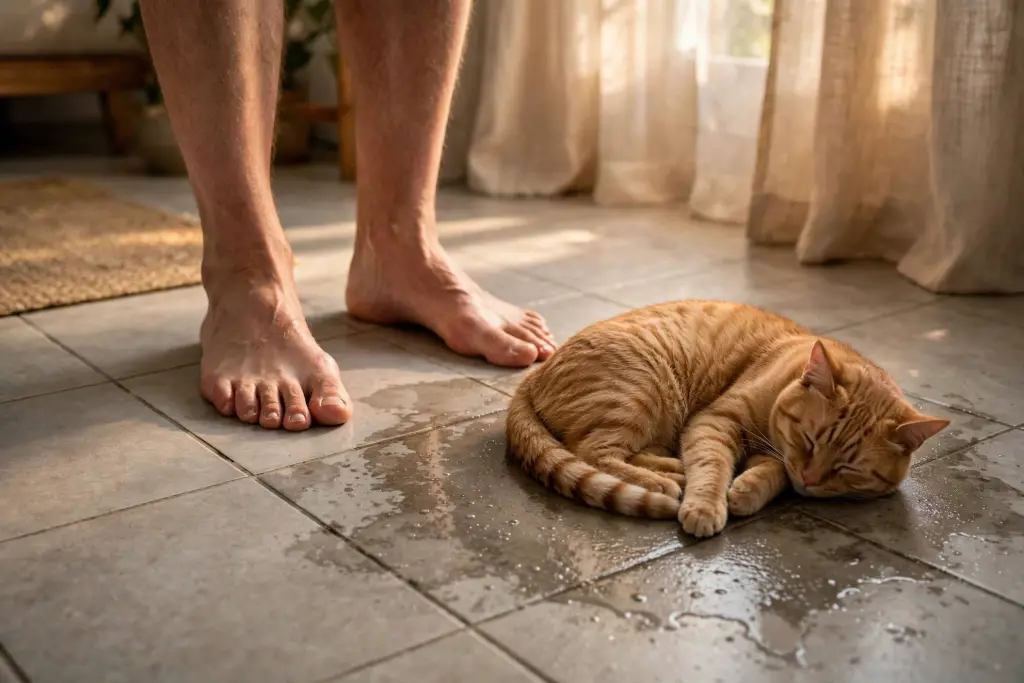
A hot water slab leak in Mountain Home usually announces itself with a warm spot on the floor that pets love and homeowners puzzle over. The hot line under your slab has sprung a leak, so heated water flows constantly, your water heater never rests, and your energy and water bills climb together. Because the leak sits under concrete, you may never see a drop of water.
We connect Mountain Home homeowners with experienced local plumbers who handle hot-side leaks. Talk to a hot-side leak pro now: call (986) 333-0586, describe the warm spot and what your water heater has been doing, and a local pro will explain what happens next. Straight answers, no pressure.
Warm Floor Right Now? Do This First
- Close the cold supply valve on top of the water heater to slow a hot-side leak. Do not touch gas or electrical controls.
- If water is surfacing through the floor, close the main shut-off.
- Call and describe where the floor feels warmest.
Why Hot Lines Leak More Often Than Cold Ones
Hot water lines live a harder life than cold ones. Every time hot water runs, the pipe expands; when it cools, it contracts. Years of that movement wear on joints and rub spots where copper meets concrete, which is why the hot side often fails first in older slab homes.
Hard water adds to the strain, and so does the simple fact that hot lines stay pressurized with heated water for long stretches. None of this means your plumbing was installed badly. It means heat and time are doing what they always do, and the hot line under the slab is where it shows first.
Warm Floors and Pets: How a Hot Water Slab Leak Shows Itself
The most famous sign is a warm spot on the floor that never cools, often in a hallway or near a bathroom. Dogs and cats find these spots fast; if your pet has claimed a warm patch of tile or laminate, take it seriously. The floor may feel warm through shoes, and the area can stay warm even when the heat is off.
Other clues travel with it: the water heater always running, a faint sound of running water with taps closed, and dampness or warping at the edges of flooring near the warm area. One warm spot plus a restless water heater is the textbook picture of a hot water leak under slab lines. Get a straight answer by phone about what you are feeling underfoot.
The Water Heater That Never Rests
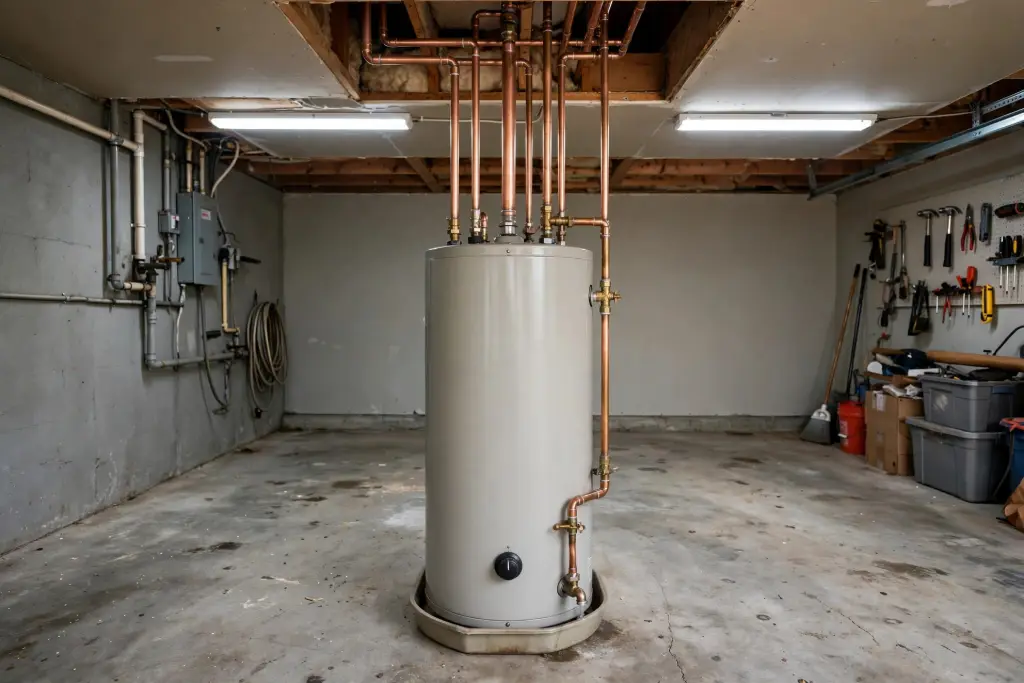
A water heater that runs constantly is working to replace hot water that is escaping somewhere. When the leak is under the slab, the heater fires again and again to heat water that pours straight into the ground. You pay for that water twice: once to heat it, once on the water bill.
If you notice the heater cycling when no one has used hot water, do a quick check: turn off the heater's cold supply valve to slow a suspected hot-side leak, but do not touch gas or electrical controls. Then call. A pro can confirm whether the hot side is the culprit with a pressure test that isolates the hot lines.
Repair Options for a Hot Water Slab Leak in Mountain Home
Once the leak is pinpointed, you usually have two paths: a spot repair through the slab at the leak point, or rerouting the hot line through walls or the attic so it never runs under concrete again. The pro will explain both, including how each one affects your floors and your daily routine.
Reroutes are popular for hot-side leaks because the new line stays reachable and the old buried line is abandoned. For a single leak in an otherwise sound system, a spot repair can be the sensible call. Either way, the pro explains the options before work begins, and the final choice is yours.
| Clue | What it suggests |
|---|---|
| Warm spot on the floor | Hot water escaping under the slab at that point |
| Water heater always running | The heater replacing water lost to the leak |
| Sound of running water, taps closed | Pressurized hot water moving where it should not |
| Water and energy bills rising together | A hot-side leak wasting heated water |
Mountain Home Homes and Hot-Side Leaks
Hot-side leaks follow housing age in Mountain Home. The 1960s to 1980s ranch neighborhoods, full of single-story slab homes with original copper, produce most of the warm-floor calls. Downtown's older streets add a twist: mixed foundations mean a warm spot there gets checked against crawlspace and basement possibilities too, and honest diagnosis matters more than assumptions.
Calls about slab leak repair in Downtown Mountain Home often involve older water heaters working overtime, while slab leak repair in West Mountain Home visits tend to involve newer PEX systems where a fitting, not the pipe, is the weak point. Many newer Mountain Home homes stand on crawlspaces, so a warm floor is not automatically a slab leak; the pro confirms the foundation type first.
While You Wait: Safe Steps for a Hot-Side Leak
- Feel for the warmest spot and note its exact location; tell the pro where it is.
- Turn off the cold supply to the water heater to slow a hot-side leak. Do not touch gas or electrical controls.
- Do the meter test: turn off every tap and appliance, then watch the meter.
- Photograph any damp or warped flooring for your records.
- Do not drain the water heater, open its panels, or break up flooring to look for the leak.
Noticing other odd signs too? Compare them with the signs of a slab leak checklist. Call before the warm spot spreads and let a local pro take a listen.
Hot Water Slab Leak Questions
A warm spot that never cools often means hot water is leaking from the line buried beneath that part of the slab. Heated water escapes constantly, warming the concrete and the flooring above it. Pets gravitate to these spots, which is why a dog's favorite new napping place is worth investigating.
The heater keeps firing to replace hot water that is leaking away under the slab. If no one has used hot water and the heater still cycles, a hot-side leak is a strong suspect. A pro can confirm it with a pressure test on the hot lines.
It wastes a lot of water and energy, and the constant moisture can damage flooring and baseboards over time. It is not an emergency in the panic sense, but it should not be ignored. Call a pro promptly so the leak is found before the damage spreads.
You can slow a hot-side leak by closing the cold supply valve to the water heater, which stops fresh water from feeding the leak. Do not touch gas or electrical controls on the heater. This is a temporary step, not a fix; the leak still needs a pro.
The pro isolates the hot lines with a pressure test, then uses acoustic listening equipment and thermal imaging to pinpoint where the leak sits under the slab. Finding it precisely keeps any opening in the floor as small as possible.
Yes. A hot-side leak is the usual suspect when the floor is warm, but the technician tests the cold side separately so a second leak is not missed. Knowing the state of both lines also helps you choose between a spot repair and rerouting the hot line through walls or the attic.
Usually yes. The water heater burns energy around the clock to heat water that leaks away, so both the energy bill and the water bill climb. Fixing the leak is the way to bring both back down.
Sooner is better than later. Every day the leak runs, it wastes water and energy and keeps moisture under your floor. Call promptly, and the pro will schedule the visit as soon as the calendar allows.
Check availability in Mountain Home and get a local pro listening at your floor.
Warm Floor? Talk to a Local Plumber
A hot water slab leak here in Mountain Home will not fix itself, and every day it runs wastes water and energy and soaks your flooring. Call (986) 333-0586 now and let a local pro track it down.
Call now about your hot water leak