The classic signs of slab leak in Mountain Home are a warm spot on the floor, a water meter that moves with every tap turned off, and a water bill that jumps without explanation. If you notice one or more of these, do the meter test described below, then call a pro. Quick checks now can save your floors later.
We connect Mountain Home homeowners with experienced local plumbers who diagnose slab leaks. Speak with a local slab leak tech: call (986) 333-0586 and describe what you are seeing; a local pro will tell you honestly whether it sounds like a slab leak or something simpler.
Meter, Bill, and Sound Clues
Start at the meter. Turn off every tap, appliance, and hose bib, then watch the meter for several minutes. If the dial or numbers move with everything off, water is going somewhere it should not. This is the simplest slab leak symptom check a homeowner can do, and pros use it too.
A high water bill leak often shows up before anything else: usage jumps while your habits stay the same. Compare two or three bills side by side. The sound clue is just as telling. If you hear water running under floor surfaces when every tap is closed, press your ear to the floor near bathrooms and the water heater; a faint hiss or rush points to the line below.
Low water pressure at a single fixture can also belong on this list, especially if it appeared gradually. One weak faucet plus a moving meter is a combination worth a professional look.
Floor, Wall, and Baseboard Clues
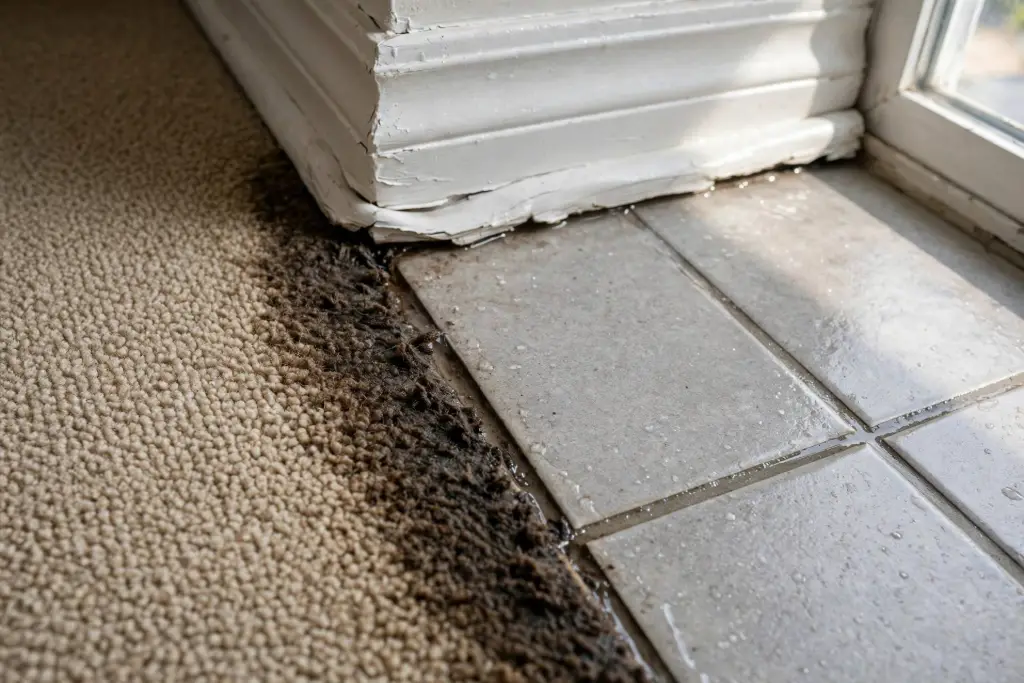
Warm or damp patches on the floor are the most visual signs. Tile that feels warm underfoot, laminate edges that lift, carpet that stays damp in one spot, or grout that darkens for no reason all deserve attention. Baseboards that swell or pull away from the wall near a wet area tell the same story from a different angle.
Cracks deserve a careful read. A slab leak can cause cracks in tile or flooring near a wet area as moisture moves through concrete, but not every crack means a leak; houses settle and concrete shrinks. The pattern that matters is cracks plus moisture, warmth, or a moving meter. One of those alone is a hint; two together are a strong signal. Get Mountain Home help if two or more of these are showing up at once.
Outdoor Clues Near the Foundation
Step outside and look along the foundation line. Soil that stays soggy in one spot during dry weather, a patch of grass that grows faster and greener than the rest, or water seeping where the slab meets the soil can all trace back to a line leaking underneath.
In Mountain Home's dry climate, a perpetually damp strip of ground stands out. Check where the main line enters the house and along the path to the meter. Outdoor clues will not tell you which line is leaking, but they tell the pro where to start listening.
When It Is Not a Slab Leak: Toilets, Irrigation, and Condensation
Honesty first: many suspected slab leaks turn out to be something simpler. A running toilet can waste huge amounts of water and mimic a high bill; put food coloring in the tank and check the bowl in twenty minutes. Irrigation lines leak too, and a soggy patch near a sprinkler zone is more likely a sprinkler problem than a slab problem.
Condensation fools people as well. Cold water lines sweat in humid weather, and that moisture can drip onto floors or into cabinets. Air conditioning condensate lines and water heater relief valves discharge water that sometimes gets blamed on the slab. A pro sorts these out fast, which is why describing exactly what you see on the call matters more than guessing.
And remember the foundation itself: many newer Mountain Home homes stand on crawlspaces, not slabs. A leak in a crawlspace home is a different job with different access. Never assume every hidden leak is a slab leak; the pro confirms what is under your floor before recommending anything.
| What you notice | More likely cause | Quick check |
|---|---|---|
| High bill only | Running toilet | Food coloring in the tank |
| Soggy patch near sprinklers | Irrigation leak | Run zones one by one |
| Damp cabinet under a sink | Condensation or a supply drip | Dry it, watch for return |
| Warm floor plus moving meter | Slab leak | Call a pro to listen |
What to Do Next After Spotting the Signs
If your checks point toward a slab leak, do the meter test once more to be sure, photograph any damp or warm areas, and note when you first noticed each sign. Then call. A pro will ask what you found and decide whether acoustic listening, thermal imaging, or a pressure test is the right next step.
Whatever you spotted, start with diagnosis: you need to know what the problem is and where it is before anyone can talk about a fix. Read about slab leak detection and what the visit involves.
How the Signs Show Up in Mountain Home Homes
In Mountain Home's 1960s to 1980s ranch neighborhoods, the classic story is a warm hallway tile plus a restless water heater in a single-story slab home with original copper. Downtown's older streets add a twist: mixed foundations mean a damp floor might trace to a crawlspace line instead, so the meter test matters even more there.
Newer north side streets, where slab leak repair in North Mountain Home calls originate, mix slab and crawlspace builds, while slab leak repair in Downtown Mountain Home visits often involve the city's oldest supply lines. The signs of slab leak in Mountain Home are the same everywhere; only the likely source changes, which is why a pro confirms the foundation type first.
While You Wait: Safe Steps After Spotting Signs
- Do the meter test: everything off, watch the meter for movement.
- Note warm spots, damp areas, and sounds with dates; photos help.
- If water is surfacing, close the main shut-off.
- Do not break up flooring or open walls yourself.
- Check toilets with the food coloring test to rule out the simplest cause.
Ask about availability and describe exactly what you found.
Slab Leak Sign Questions
Usually a warm spot on the floor, a water bill that climbs without explanation, or the sound of running water with taps closed. Any one of these is worth the meter test: turn everything off and watch for movement. Two signs together make a strong case for calling a pro.
Moisture moving through concrete can crack tile or warp flooring near a wet area, yes. But houses also settle and concrete shrinks, so cracks alone prove nothing. Cracks plus warmth, dampness, or a moving meter are the combination that points under the slab.
A hidden leak is one common reason, but check the simple causes first: a running toilet, a dripping hose bib, or a sprinkler zone stuck on. If those check out, do the meter test with everything off. A moving meter means water is escaping somewhere in the system.
On the water bill, absolutely; a running toilet can waste an astonishing amount of water. It will not warm your floor or hiss under the slab, though. The food coloring test in the tank settles it in minutes, and it is always worth ruling out first.
You may be hearing a slab leak: water escaping a pressurized line under concrete makes a faint hiss or rush. It can also be a toilet refilling, a water heater recovering, or an irrigation valve. If the sound is constant and localized to one area of floor, call a pro to listen with proper equipment.
Persistent moisture under flooring or inside walls can lead to mold growth over time, which is one more reason not to ignore a suspected leak. We cannot assess health questions; focus on finding and fixing the moisture source. A pro finds the leak, and the drying is handled from there.
The water meter. It is the one check that works whether the leak is warm or cold, loud or silent. Turn everything off, watch the dial for several minutes, and note the result before you call. If water is surfacing through the floor, close the main shut-off first.
Reach the on-call team now if the signs are adding up.
Spotted the Signs in Mountain Home? Call Now
Signs of slab leak in Mountain Home homes are worth a professional look, not a wait and see approach. Call (986) 333-0586 now, describe what you found, and get a straight answer from a local pro.
Call now if you spot the signs